Showing posts with label XP. Show all posts

Monday, December 21, 2009

Untold Windows Tips and Secrets B


Welcome to another Hacking Truths Manual. This time I have a collection of Tips and Tricks which no body normally knows, the secrets which Microsoft is afraid to tell the people, the information which you will seldom find all gathered up and arranged in a single file. To fully reap this Manual you need to have a basic understanding of the Windows Registry, as almost all the Tricks and Tips involve this file.

Some Tips And Tricks For Your Windows XP


STOP NOISE IN COPYING AUDIO CD
When using 3rd party burning software (eg, Nero Burning Rom) to copy audio CD,some noise may be heard at the end of each track. To prevent this,try the following method:
1. Enter System Properties\device manager
2. Select IDE ATA/ATAPI controllers
3. Double click on thee CD writer IDE channel
4. Select advance setting
5. Change the transfer mode to 'PIO Only'
6. Restart Computer

Stop A Restart Process In 3steps


Some times we need to stop some restart process quickly. In windows XP some times it gives auto restart warning and here is good solution for it.

1. Go to Start menu
2. Click on RUN
3. Enter the following command excluding hashcodes "shutdown -a"

its Done.

Single Click Shutdown


Did you know that in Windows XP you can shut down your computer from the (eventually DOS prompt) command line box? Moreover, you can do this by clicking your mouse only once.

All you need to do is... right-click on an empty Desktop spot -> select New -> Shortcut -> type shutdown followed by a space, and then enter one or more of the parameters listed below -> click Next -> type a suggestive name for your new shortcut -> finally, click Finish.

Thursday, December 17, 2009

Speeding Up your Windows XP


This tutorial helps in speeding up your system significantly.
Before you begin using this tutorial, kindly follow these tips:
  •     Follow every instructions very carefully.
  •     Make a back-up copy of your hard disks, in case you do anything wrong.
  •     Make a system restore point. In case you do anything wrong, you can just restore your PC to earlier settings.
  •     Before editing the registry, backup the registry first.
  •     Most changes take place after you reboot your PC.
OK…Lets Begin

Tuesday, December 15, 2009

How to create Windows XP Live CD, complete with preinstalled programs

To create a Windows XP Live CD we will require
1. Bart PEbuilder
2. A CD burner like Nero
3. A bootable Windows XP CD and
4. Some pebuilder plugins to customize the CD.


Step 1: Download PeBuilder from here and install it.

Monday, December 14, 2009

.FLV – .MOV – .MP4 Thumbnails for Win XP WORKING, Add any extension and see a thumbnail of it…

It’s pretty easy once you got the trick… All you had to do is create a REG file with the next lines:

REGEDIT4
[HKEY_CLASSES_ROOT\.flv\ShellEx\{BB2E617C-0920-11d1-9A0B-00C04FC2D6C1}]
@=”{c5a40261-cd64-4ccf-84cb-c394da41d590}”

Hard drive gone bad


The most common problems originate
from corruption of the master boot record, FAT, or directory.
Those are soft problems which can usually be taken care of
with a combination of tools like Fdisk /mbr to refresh the
master boot record followed by a reboot and Norton disk doctor
or Spinneret.

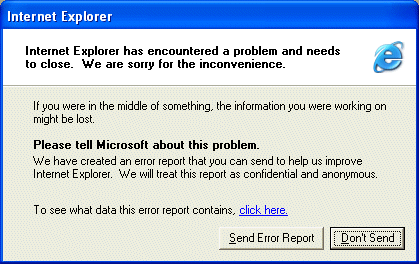
Disable The Send Error Report, to Microsoft


Open Control Panel
Click on Preformance and Maintenance.
Click on System.
Then click on the Advanced tab
Click on the error reporting button on the bottom of the windows.
Select Disable error reporting.
Click OK
Click OK

Delete An "undeletable" File


Open a Command Prompt window and leave it open.
Close all open programs.
Click Start, Run and enter TASKMGR.EXE
Go to the Processes tab and End Process on Explorer.exe.
Leave Task Manager open.
Go back to the Command Prompt window and change to the directory the AVI (or other undeletable file) is located in.
At the command prompt type DEL where is the file you wish to delete.
Go back to Task Manager, click File, New Task and enter EXPLORER.EXE to restart the GUI shell.
Close Task Manager.

Saturday, December 12, 2009

What is the Registry?


The Registry is a database used to store settings and options for the 32 bit versions of Microsoft Windows including Windows 95, 98, ME and NT/2000. It contains information and settings for all the hardware, software, users, and preferences of the PC. Whenever a user makes changes to a Control Panel settings, or File Associations, System Policies, or installed software, the changes are reflected and stored in the Registry.

Wednesday, December 9, 2009

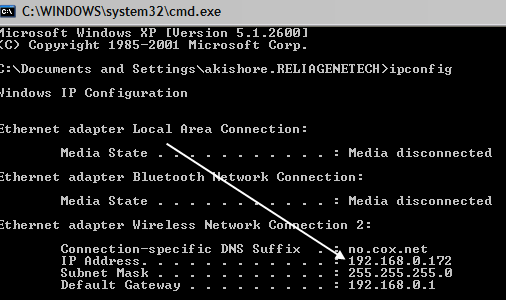
How To: Change Your Ip In Less Then 1 Minute


1. Click on "Start" in the bottom left hand corner of screen
2. Click on "Run"
3. Type in "command" and hit ok

You should now be at an MSDOS prompt screen.

How to change Text on XP Start Button


As you can see from the screen capture above it would seem that the five character limit isn’t etched in stone. The button expanded to accept the text I entered with no problem. I’ve been using the system for a few weeks now with no adverse effects. That’s not to say I won’t discover something down the road a bit, but for now I feel comfortable with the changes. If you’d like to try the procedure I used, the instructions follow.

Tuesday, December 8, 2009

How to install Windows Xp Professional step by step


This procedure demonstrates how to install Windows XP Professional. The procedure to install Windows XP home edition is very similar to the professional edition. Since Windows XP Pro is more advanced operating system, it will be used to demonstrate the installation procedure.
The best way install Windows XP is to do a clean install. It is not difficult to perform a clean installation. Before you perform the installation I recommend that you check Windows XP Compatibility List to ensure that your hardware is supported by XP. If your hardware is not on the compatibility list you can check your hardware manufactures website to download the drivers for Windows XP. Save all the necessary drivers onto floppy disks or CD before you start the installation.